
Sactown Scouting Report: The Unorthodox Upside of Keaton Wagler
Keaton Wagler is a different type of prospect than the others considered to be in his tier, but his combination of size and skill make for an intriguing talent.
Watch: Will Darius Acuff Jr. Be One Of The NBA's Most Polarizing Players? | 41 seconds
In a class full of intriguing guard initiators, there’s plenty of varying playstyles and archetypes the Sacramento Kings are expected to have their pick from at seventh overall, assuming they remain in that spot.
Illinois freshman guard Keaton Wagler exploded onto the scene in his debut collegiate season despite being ranked around or below the top-150 players in his recruiting class. As the season went along, his combination of stellar shooting, decisiveness, and footwork beyond his age earned him more touches.
Being the leading scorer while leading the Fighting Illini to a Final Four appearance was enough to catapult him into the early lottery conversation, some believing he could go as high as fifth overall thanks to his shot creation upside.
Yet, because of his below-average strength and athleticism for a lottery-level guard, Wagler is one of the more unorthodox bets in this range. Some wonder if he may be better suited as a secondary creator than a full-time lead ball handler.
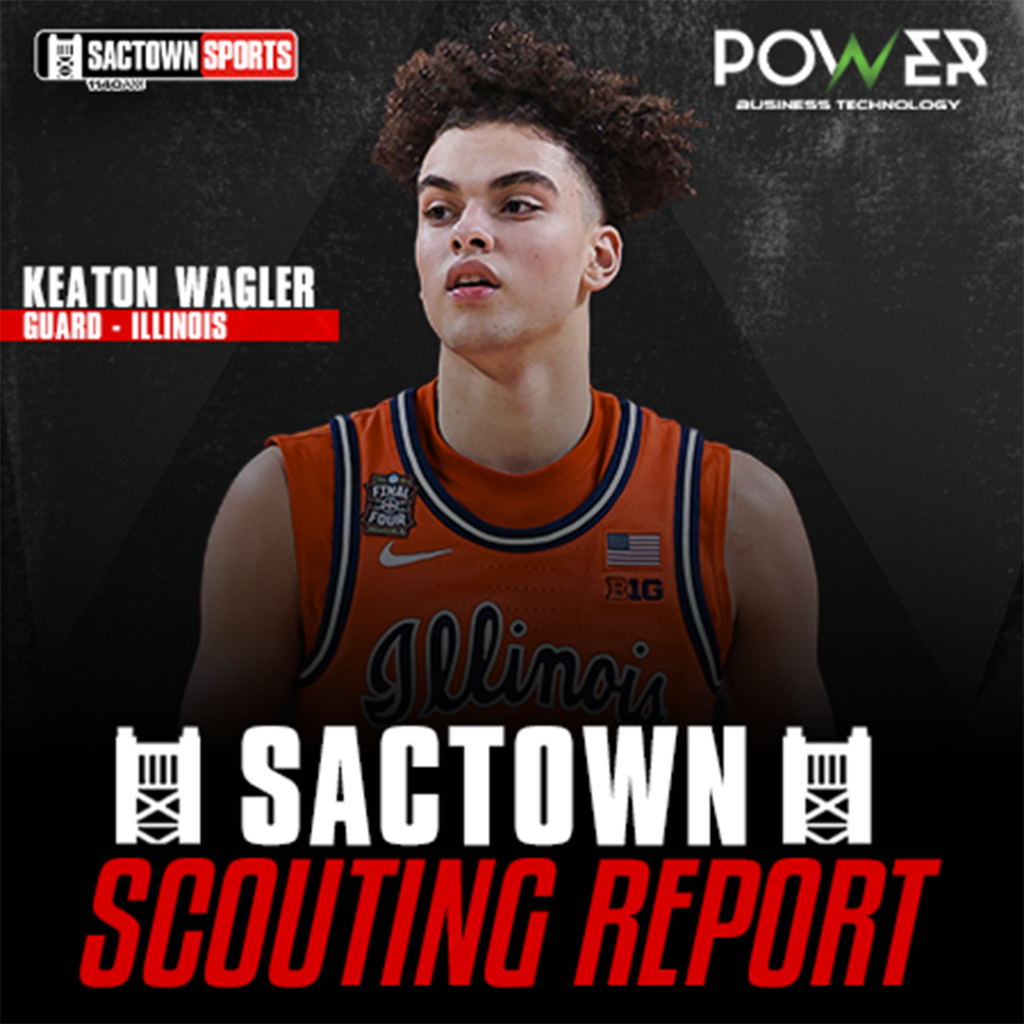
Combine Measurables
-
Height without shoes: 6’5″
-
Weight: 188 pounds
-
Wingspan: 6’6.25″
-
Standing reach: 8’4″
-
Max Vertical: 36.0 inches
This section outlines the pros and cons of Wagler’s NBA projection. You’ll see in the clips below why his 6-foot-5 frame made all the difference, seemingly creating more “open” looks than the likes of Kingston Flemings or Darius Acuff. Positional size feels as important as ever in the modern game and is a significant positive.
Being 188 pounds at that size is the other side of the coin. That’s just three pounds heavier than what Acuff (6’2) weighed in at for reference. Recording a 36-inch vertical wasn’t surprising, but being a “high-flyer” was never on the tape either, with no better example than Wagler missing his only dunk attempt all season long.
While that athletic profile, and the limitations that came with it, are one of the larger concerns surrounding his creation ability translating, the more optimistic crowd would point to the fact that when he was 5-foot-8 as a high school freshman, he therefore had less time learning how to use his frame to his advantage.
He also reportedly came into training camp with Illinois weighing roughly 170 pounds, so plenty of scouts wonder how much more strength he can add over the next few years.
Managing to create despite those limitations, thanks to a clearly high basketball IQ, impressive footwork, craftiness, and control, is where the Tyrese Haliburton and Shai Gilgeous-Alexander comparisons come from. Every comparision is flawed (and I’d argue those two especially), but you could see bits and pieces in his stellar freshman season.
Superpower: Shooting with Feel
Elite three-point shooting is where the conversation has to begin with the 6’5 prospect. Despite carrying his team offensively with roughly 18 points per night, Keaton Wagler still managed to convert 39.7% from beyond the arc.
Doing so on 5.9 long-distance attempts per game is surely appealing to NBA teams, but managing to remain efficient from there while on-ball is maybe his strongest lottery case. His season-high 46-point performance against Purdue (then ranked 4th in the nation) was a prime example, as he went 9/11 from three.
Keaton Wagler vs Purdue
46 PTS (76/82/85)
4 AST13/17 FG
9/11 3PT🔥
11/13 FT46 on 17 shots!!
When he was forced to shoot it he was hitting everything. When he was forced to drive he was able to get to the line and knock down his free throws. pic.twitter.com/uIwwNjOzDu
— clippa twitta (@clipfullyloaded) May 23, 2026
In the first clip, you can see where some of those comparisons to Haliburton come into play. To make a Kings comparison, parts of how he went about his business reminded me of Bogdan Bogdanovic, only Wagler did it at a much younger age.
While lacking automatic blow-by speed, he recognizes his opportunities and takes them quickly. With Purdue’s big man turning his hips chasing downhill, Wagler pulls off a smooth stepback before draining a now-open triple.
One of his more impressive skills, I thought, was how rarely he wasted moves. Being decisive while having the threat of his long ball and reading the game boded well. Then you take note of his quick, stellar footwork and variety of handles (hang dribbles, crossovers, spins), and that is where the loose SGA stylistic comparisons start to make some sense. Again, those comparisons (I think) should only be made from the standpoint of how Wagler created his off-the-dribble looks.
Unlike the guards he’s often listed among, Wagler didn’t use the mid-range quite as much. He made just 34.8% of his mid-range looks and attempted just 4.5 per 100 possessions. In ways, that’s almost a plus for some because the 6’5 creator is playing “Moreyball” with a large majority of his looks coming from at the rim or beyond the arc.
Running a pick-and-roll was by far his most common action at Illinois, and he often left defenders in predicaments.
If they went under, Wagler could pull up from NBA range with confidence. He shot 38% on off-the-dribble triples. Going over while the defender drops, he can take one or two steps into that look and doesn’t often seem bothered by rearview contests.
Creating your own shot from three is one of the NBA’s most valuable lone skills, but how he’s able to use that to set up his teammates may be what determines the ceiling.
Creation: Primary or Secondary?
If Wagler had standout speed and bounce, I think he would be a top-three pick in the 2026 NBA Draft, no question. At that point, the conversation around his ceiling would probably be even louder. Without that, he’s more reliant on his playmaking than they’re forced to.
That brings us to one of the bigger swing skills in Wagler’s game, his passing. Is it good enough for him to become a primary creator in the NBA, or will he be a better fit in a secondary role? How much he can overcome the athletic shortcomings is the biggest question, but distributing like a true offensive hub out of the pick-and-roll would go a long way toward counteracting those limitations.
With his offensive responsibility, recording 4.2 assists per night compared to 1.8 turnovers (2.4 AST/TO) was impressive. Again, he rarely felt rushed into mistakes. That meant a smaller sample of adventurous passes (like seen with Mikel Brown Jr.) but plenty of simply making the right next read and executing.
Keaton Wagler can pass. pic.twitter.com/agl7v7tFYo
— ALBERT GHIM (@albertoeghim) April 29, 2026
In the pick-and-roll, where he could reasonably do a majority of his NBA damage, Wagler would set up his defender well before engaging with the screen. Whether that was a jab step in the opposite direction or hang dribble, he would come tight off the screen and keep a defender in jail as needed before reading the defense and making a proper read.
While rarely manipulative with his reads, throwing defenders off with his eyes before a pass nobody expected, he executed the simple play with ease and quickness. His comfort making live-dribble passes with either hand, drop-offs to bigs, and soft lobs was impressive for a freshman.
Draft experts seem to believe in his abilities here to varying extents. Reading the second level of defenses is the next step if he were to become a primary option, but that would require betting on notable growth rather than treating it as something already proven. Betting on a 19-year-old high-IQ player to improve seems like a smart idea, in my opinion.
Unorthodox Rim Pressure
This is where the lack of athleticism and strength shows itself a bit. The most popular stat mentioned by doubters of Wagler is that he missed his only dunk attempt in college. At 6-foot-5, you would think that there’d at least be an opportunity here and there in transition, but he ended the season with none.
Crafty is the right word for how he managed a 57.5% rate at the rim. That’s a bit better than Flemings (57.3%) and worse than Acuff’s (59.7%). While his height advantage was solid, his production was strong, and his ability to generate free-throw attempts really aided him.
Keaton Wagler finishing at the rim:
Really good at all 3 levels pic.twitter.com/yZ4ABs4ckE
— ItsAllLove (@nbanerdd) May 10, 2026
Despite often bouncing off defenders due to his lower weight, he was willing to embrace contact around the basket, evidenced by his 5.8 free-throw attempts per night.
Between spin moves, Harrison Barnes-like slow steps, pivots around the basket, and off-balance floaters after initiating contact, Wagler found ways to finish without vertical pop. Now, that would be where more of the SGA comes in, even though I think comparing anyone to an MVP is ridiculous. Just for the sake of their finishing style.
Can the Creation Survive vs. Switches?
Being able to score with ease out of pick-and-roll, make the right read to his teammates, and be an exceptional threat to shoot is a promising profile worthy of a lottery bid. But the biggest question for Wagler may be how switch-heavy NBA defenses could limit him.
Can he be decisive and shifty enough with his movements to still create space without the help of a screen? While the framework is there, any team would be left betting that his handle and frame will continue to develop substantially. In a way, though, I also think he’s perhaps the safest bet to be a valuable player in the league.
Shooting 41% on catch-and-shoot threes, attacking closeouts, and making the right read while limiting mistakes is a bankable foundation for an NBA role player. His ability to function off-the-ball is likely what makes him the most common player mocked to the Los Angeles Clippers at pick five, given that they already have a lead guard in Darius Garland. That sort of positional versatility and creation upside at 6’5 is the sell.
But his ability to reliably create advantages, play through contact, and punish help will be the difference between becoming a high-level role player and something more. The margins in how quickly decisions need to be made at the NBA level are so slim. Even though that was one of Wagler’s primary strengths in college, the next level is a different beast.
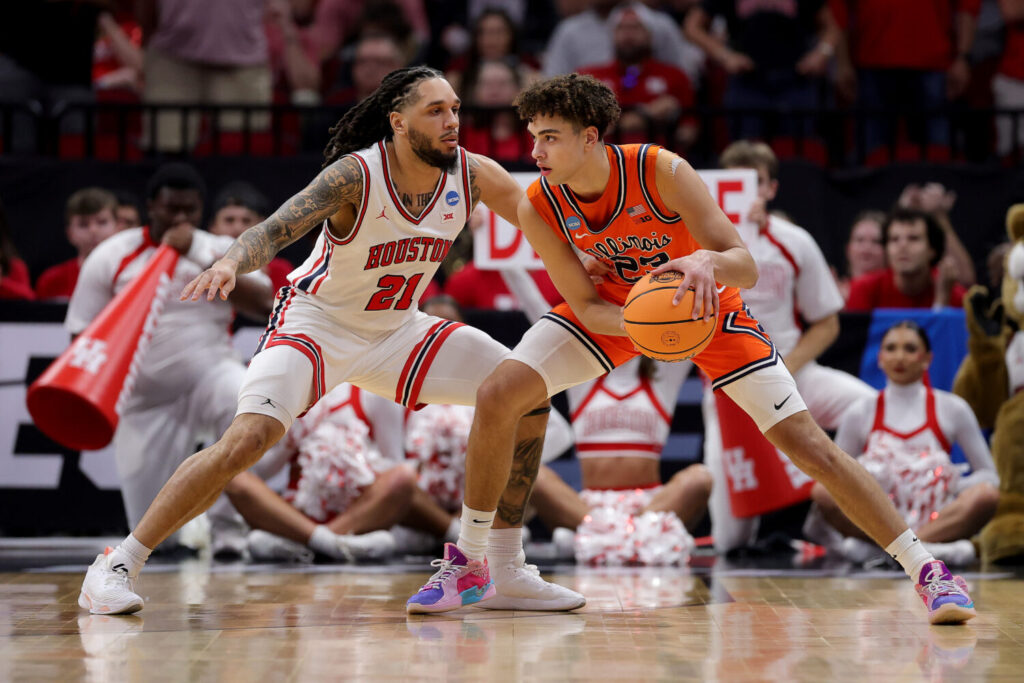
(Photo by Alex Slitz/Getty Images)
Defense and Physicality
With his 6-foot-6 wingspan and feel for the game, the hope is that Wagler’s size advantage over guards like Acuff, Flemings, and Brown Jr. also shows up defensively. He had good showings against some smaller guards, moving his feet well enough to stay in front fairly consistently, but not at a stellar level.
He logged 0.9 steals per game at Illinois, tallying 11 games with multiple steals and 16 with none recorded. Their team played a more conservative help defense, leading to questions about whether Wagler could cause more deflections if prompted.
Yet again, the sub-190-pound frame comes into play. As mentioned, Acuff weighed in around the same mark, and there will be some NBA guards who can even bully him at the next level — not to mention wings and forwards. All non-defensive rookies get tested in switches their first few seasons, too.
His shortcomings on that end were rarely due to a lack of effort. As with most of his film, you could see Wagler processing the game on both sides of the floor. Fighting through screens wasn’t a strong suit of his either, something that will need to be cleaned up mechanically. Mastering defensive fundamentals in the way he seems to have on the other end would go a long way.
Kings Fit: Betting on Skill and Size
Keaton Wagler could end up being one of the “how didn’t this guy go higher?” players in the class, though this draft has several candidates who could fit that label.
That’s why the 2026 NBA Draft class is so highly regarded. The top-end talent is exceptional between AJ Dybansta and Darryn Peterson, but the depth among the first 8-10 picks is what could set it apart. If Scott Perry sat at the podium after the first round and pitched Wagler as a high-baseline prospect because of his feel, shooting, and room to grow into his frame, I could buy the logic.
Throughout this process, I’ve felt reassured that the Kings will have a chance at an intriguing talent if they remain at pick seven. It may simply come down to which ‘flavor’ they prefer.
Wagler would not be the traditional point guard Sacramento has been clear it needs, but that need does not have to be solved with their lottery pick. The blend of shotmaking, quick decision-making, footwork, and IQ that Wagler showed in his freshman season makes him deserving of consideration should he make it there.
In my opinion, the reasonable questions about Wagler’s athleticism and frame are what keep him out of the top-three conversation, but not something that should question his belonging within the top-7 conversation.
More Sactown Scouting Reports
- Sactown Scouting Report: The Pace, Poise, and Playmaking of Kingston Flemings
- Sactown Scouting Report: The Star-Swing Case for Darius Acuff Jr.
Upcoming Sacramento Kings & NBA Offseason Schedule
- Tuesday, June 23rd – NBA Draft (Round 1)
- Wednesday, June 24th – NBA Draft (Round 2)
- Tuesday, June 30th – NBA Free Agency negotiation period begins (3 PM PT)
- Thursday, July 9th – NBA Las Vegas Summer League begins
- Monday, July 13th – Free Agency moratorium ends / signings can become official
Thank you for reading SactownSports.com. Follow us on Twitter and Google News, and subscribe to our YouTube channel.
Related
 Emanuel Sharp: Sacramento’s MVP of Summer League?
 Sacramento’s rebuild hinges on development–not wins
 Deuce Mason is ‘not concerned at all’ about Darius Acuff Jr.
 Why the Raiders finally have a clear direction entering 2026
 Could the 49ers reunite with Deebo Samuel?
 Why the 49ers are built to bounce back in 2026

Comments