
Sactown Scouting Report: Final Kings Big Board
The Sactown Scouting Report ranks the Kings' best options at No. 7, with a chance to add a franchise-changing talent in the 2026 NBA Draft.

Kingston Flemings #4 of the Houston Cougars dribbles the ball as Darius Acuff Jr. #5 of the Arkansas Razorbacks defends during the first half of the Never Forget Tribute Classic at Prudential Center on December 20, 2025 in Newark, New Jersey. (Photo by Ed Mulholland/Getty Images)
(Photo by Ed Mulholland/Getty Images)
After months of analyzing players and considering options, the 2026 NBA Draft is just one day away. It’s an opportunity for the Sacramento Kings to begin trending in the right direction and land a franchise centerpiece that they unquestionably need.
This edition of the Sactown Scouting Report is a Kings-specific big board rather than generally focused, as they head into the first round as owners of the No. 7 overall pick.
Including 14 players covers the top of the class that would likely cost too much to trade up for, realistic candidates at seven, and potential trade-down targets.
Given Sacramento’s current situation, they have a clear need for long-term development and have made it clear they lack a starting-caliber point guard. That doesn’t have to be filled via the draft, but luckily, this class has a handful of intriguing lead guard candidates projected right within their range.
Lacking structure and an optimistic future last season, in a year that was chaotic far more often than not, this is a chance for general manager Scott Perry to mark the beginning of a turnaround for this version of the Kings.
Here’s a look at the tier and final rankings I settled on prior to the 2026 NBA Draft.
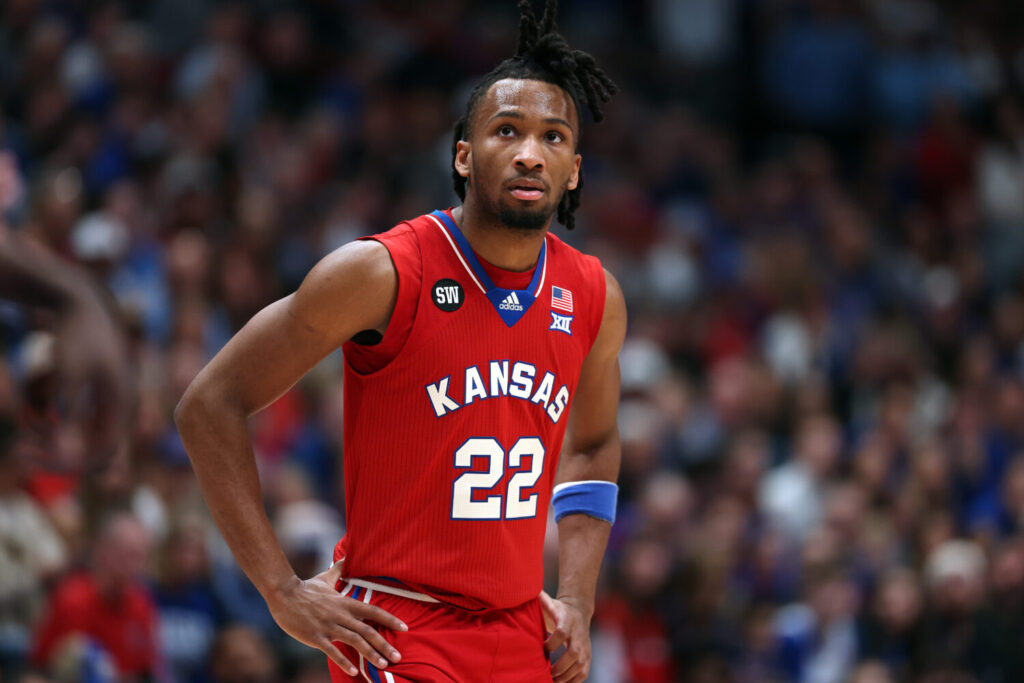
Darryn Peterson #22 of the Kansas Jayhawks watches during a timeout in the game against the Kansas State Wildcats at Allen Fieldhouse on March 07, 2026 in Lawrence, Kansas. (Photo by Jamie Squire/Getty Images)
Tier 1: Worth Trading Up For?
1. Darryn Peterson
Peterson is the player I feel most confident about becoming a star in the NBA. Watching his lone season at Kansas, albeit frustrating at times with the lack of consistent playing time, he looked the part and was usually the best player on the floor by a notable margin. That includes his matchup against Dybansta and BYU.
His shot creation and making were undeniable, and he always seemed to be in balance and comfortable rising up over defenders with ease. Playing at his own pace, he made it look smooth and effortless. Consistently generating paint touches and his lack of passing on display with the Jayhawks are the main questions people present, but I thought the flashes in those areas were still standout and far from overwhelming flaws.
For the Kings, it’s hard to imagine a world in which they could realistically move up for Peterson, and given where they’re at in their team-building process, sacrificing the future first-round picks it would take to move up simply wouldn’t be worth it. But Peterson is going to be a force in the NBA for whatever team lands him.
2. AJ Dybansta
Dybantsa is another one of those where it’s not hard to see him becoming the best player on a championship-caliber team.
Big wings who can create their own shots, get downhill, and pressure defenses are highly valued and hard to come by. Dybantsa has the size, athleticism, and shot-making flashes that make it easy to see why he’s usually listed as the best prospect in the class.
Placing him below Peterson is more about how highly I view Peterson rather than a knock on Dybansta. The BYU product could take longer to adjust to the physicality of the next level than people expect, but the upside is unquestionable.
In my mind, there’s no wrong answer between Dybansta and Peterson for Washington and Utah at the first two spots. There’s also no reason they should entertain trading down with a team like Sacramento, barring a godfather offer that would be poor business by Perry and the Kings.
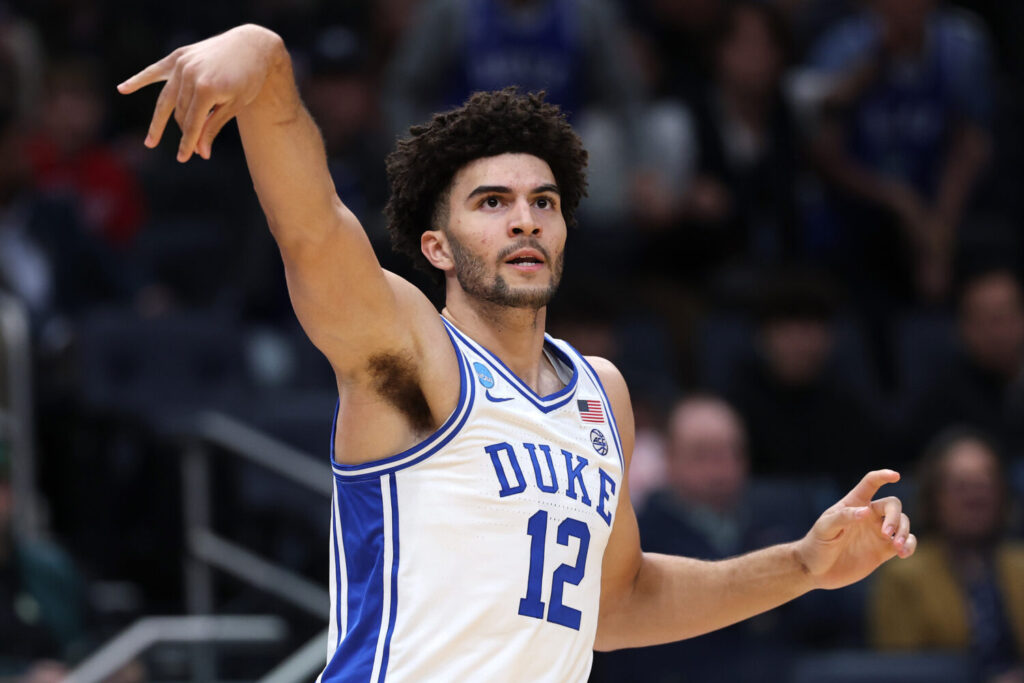
Cameron Boozer #12 of the Duke Blue Devils reacts during the first half of a game against the UConn Huskies in the Elite Eight of the 2026 NCAA Men’s Basketball Tournament at Capital One Arena on March 29, 2026 in Washington, DC. (Photo by Patrick Smith/Getty Images)
3. Cameron Boozer
Boozer isn’t as tantalizing a prospect as Peterson and Dybansta, but his production was undeniable, and he’s won basketball games at every level he’s played. He was probably the best collegiate player last season by making an impact in a wide variety of ways for Duke.
He can score from multiple levels, is a phenomenal passer and defender, rebounds through traffic, and plays with strength and physicality. The first two prospects have more obvious athletic upside, but Boozer is the one I’d feel most confident in saying he’s going to be a highly productive NBA player no matter what. He’s got the highest floor of the bunch.
The question is whether Boozer becomes a true franchise-level star or more of a fitting elite second option. Whether he will reliably be able to create and score off advantages may be the difference there, but I would be careful overthinking a player this productive and this smart.
If there’s a world where Boozer somehow falls to fifth or lower, the Kings should try to make a move up to get him, but I highly doubt that will take place.
4. Caleb Wilson
Wilson rounds out the top group for me, and I really wanted to place him higher with obvious tools in the form of length, athleticism, two-way impact, and a skillset that already proved productive.
He has great size, moves well, can defend in space, protect the rim in flashes, and shows enough offensive skill to forecast a potential high-end two-way forward outcome. With that sort of combination, he easily belongs in this tier and depending on the team selecting I would strongly consider him over Boozer as well. It’s upside-down vs. floor.
But, there is still more projection involved in his evaluation. Wilson’s flashes are impressive as anyone, but there are more questions about his game as well. He may eventually become the exact type of frontcourt player every team wants and is deserving of landing in this tier. If I was being more a stickler, Peterson and Dybansta probably belong in tier 1 while Boozer and Wilson are more of 1.5 caliber.
For Sacramento, Wilson would be a fascinating trade-up target in theory, but in reality, moving up high probably costs too much. Still, if he fell unexpectedly, they should be making calls.
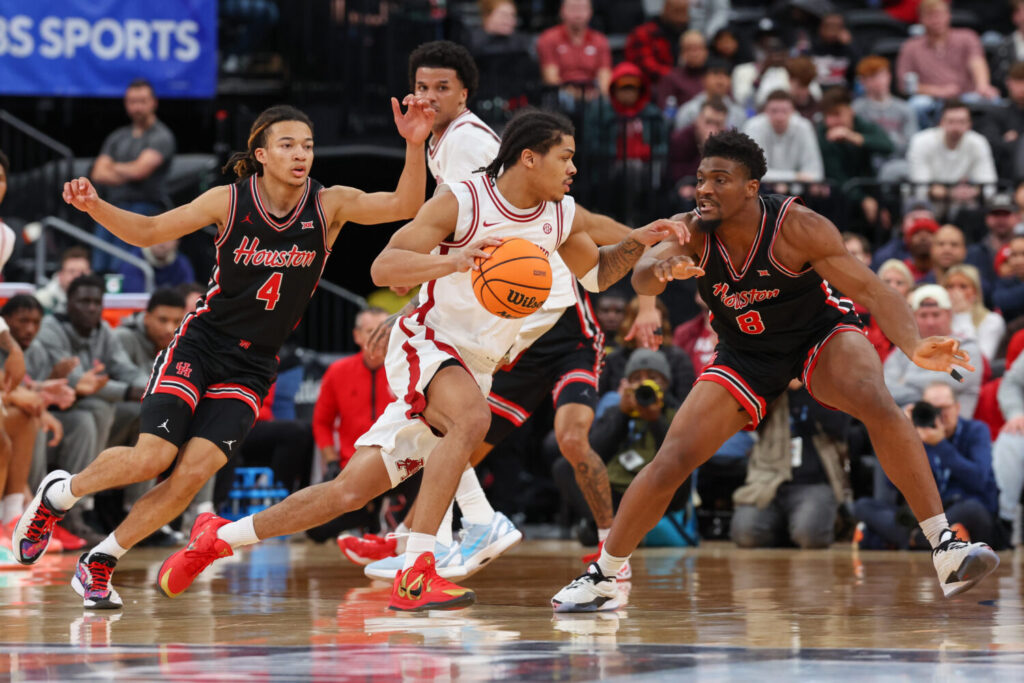
Darius Acuff Jr. #5 of the Arkansas Razorbacks dribbles the ball as Kingston Flemings #4 of the Houston Cougars defends during the first half of the Never Forget Tribute Classic at Prudential Center on December 20, 2025 in Newark, New Jersey. (Photo by Ed Mulholland/Getty Images)
Tier 2: Realistic Targets at No. 7
5. Kingston Flemings
Flemings is the first player on this board who feels both realistic for the Kings and directly tied to their biggest long-term need. I absolutley love Flemings’ game and watching him produce this season at Houston.
He is not the biggest guard in this range or the loudest scoring bet, but he feels the most like a traditional point guard who makes his teammates better. Averaging 5.2 assists to 2.2 turnovers as a freshman, his pace jumped off the screen while manipulating ball screens and consistently organizing offense. His basketball IQ and ability to read the game stood out most to me, especially compared to some other guards who may have more scoring upside but less traditional point guard structure.
At 6’2.5″ without shoes, his size will always be part of the conversation, as it will be for others, and he will need to clean up some of the scoring. Finishing at the basket (57.2% at the rim) could be better, but he can get there no problem, and I think there was enough reason to believe he can be a serious threat from beyond the arc, even if it wasn’t on standout volume with the Cougars, where he converted 38.7% on nearly three attempts per game.
If he’s on the board at pick No. 7, I’d take Flemings because I think he has a higher ceiling than people are giving him credit for, while also possessing a floor that should allow him to make his teammates around him better and play the best defense of the guard grouping beginning here.
6. Mikel Brown Jr.
Brown is probably the guard in this range I went back and forth on the most. There were moments watching him where his shooting, size, and bold creativity make him look like the future star PG Sacramento needs.
He averaged 18.2 points, 3.3 rebounds, and 4.7 assists as a freshman with a 31.4 usage rate. The efficiency wasn’t overwhelming, but a 57.7 true shooting percentage on tough shots and a large volume of threes goes a long way. His pull-up shooting, live-dribble passing, and ability to see windows others do not give him make him one of the more interesting cases in this grouping, but it was far from the cleanest tape to watch.
The same confidence that he displayed in being creative, which allowed him to be the best passer of the group, led to chaotic moments. Brown can make manipulative reads, but he also tallied too many turnovers and played too loosely with the ball at times. Dealing with a back injury at Louisville unfortunately limited the amount he was seen, but I can’t help but wonder if he would’ve solidified himself at fifth in an alternate timeline where he was out there most of the season.
If the Kings are looking for upside above all else at No. 7, I think Brown has the highest outside of the top four.

Darius Acuff Jr. #5 of the Arkansas Razorbacks shoots a free throw against the Arizona Wildcats during the first half in the Sweet Sixteen of the 2026 NCAA Men’s Basketball Tournament at SAP Center on March 26, 2026 in San Jose, California. (Photo by Ezra Shaw/Getty Images)
7. Darius Acuff Jr.
Acuff was one of the best offensive engines in the country, putting up absurd numbers as a freshman under John Calipari. He’s become the favorite among Kings’ fans and remains heavily linked to the Team.
His production was undeniable. He averaged 23.5 points, 3.1 rebounds, and 6.4 assists as a freshman, carrying Arkansas’ offense with a 29.5 usage rate. That kind of scoring and playmaking volume turned heads throughout the season, especially notable for a Kings team that needs an advantage creator and lead guard to bend defenses.
Shot creation and tough shot-making are the sell here. Acuff can get to his spots, never seems to lack confidence, and puts real pressure on defenses. He has the type of scoring package that makes it easy to see why some would have him as the top realistic option for Sacramento, but I am seemingly more skeptical than most.
Defensively, he was a train wreck. There’s been bad on that end, and then there’s what Acuff did, which seemed not to care about impacting the game on that side. People will argue that his offensive responsibility excuses that effort, but I struggle to get there. The size, defense, shot selection, and finishing consistency all require some trust, too. I worry that he’s more of a number one option on a good, but not great, team with serious limitations that will show themselves more in eventual postseason basketball rather than right out of the gate.
Acuff may have the highest scoring upside of this group, but I am not as confident in the floor or the overall two-way impact. He’d be far from a bad addition for a Kings team that lacks what he does, though.
If they take him at No. 7 like things seem to be pointing towards, I would understand it but be worried. They need to swing. I just slightly prefer the balance of Flemings and the size and skill combination of Brown.
8. Keaton Wagler
Wagler looks the part of an NBA player with better size than others mentioned and a patience/poise to his game.
At 6’6.25” without shoes, he averaged 17.9 points, 5.1 rebounds, and 4.2 assists as a freshman while posting a 59.6 true-shooting percentage. Boasting that strong all-around profile with the combination of size, shooting, and feel makes him one of the safer players in this range.
He should be able to play on or off the ball, space the floor, make the next pass, and I thought his passing was extremely impressive. If the Kings already had their long-term primary initiator, Wagler would probably be an easier player to talk themsevles into. It’s also why he’s so often linked to the Clippers at five, considering they already have Darius Garland.
But athletic and physical limitations currently lead to questions about whether he is a true lead guard. Quick decision-making and decisive movement go a long way, but leave little margin for error at the NBA level. Beating swithes is the main thing I wonder when projecting that ceiling.
The Kings need someone who can change the structure of their offense long term, and while Wagler could progress into that, I feel like Flemings, Brown, and Acuff are better bets to do so.
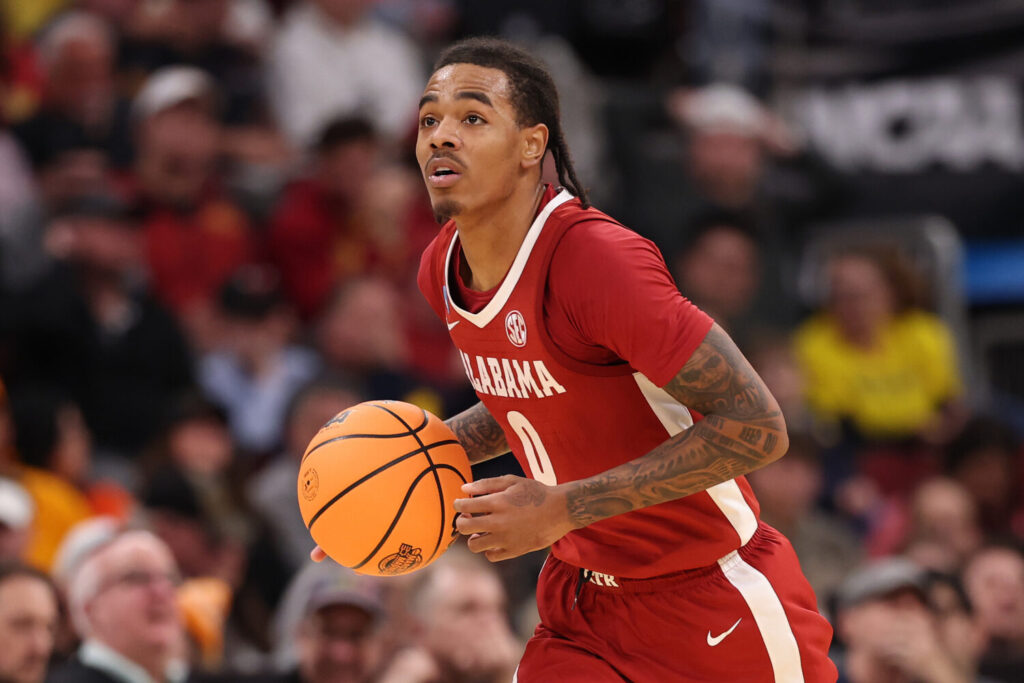
Labaron Philon #0 of the Alabama Crimson Tide dribbles against the Michigan Wolverines in the Sweet Sixteen of the 2026 NCAA Men’s Basketball Tournament at the United Center on March 27, 2026 in Chicago, Illinois. (Photo by Michael Reaves/Getty Images)
9. Labaron Philon Jr.
After watching Philon, I was surprised he hadn’t been talked about more within this range. He’s one of the guys that I could see people looking back and wondering why he wasn’t taken higher after a stellar sophomore season at Alabama.
He averaged 22.0 points, 3.5 rebounds, and 5.0 assists with a 62.6 true shooting percentage and 30.0 usage rate. With a game built more on craft and probably the best handle in the class, that sort of production can’t be ignored.
Using that handle, Philon created advantages in a ball-screen-heavy offense, scoring from all three levels and limiting mistakes. He may have the most balanced offensive profile of the group, but a slender frame and less athletic tools there’s more questions.
Will those physical limitations cap his upside? He is quick, but not especially explosive in his first step, and more reliant on skill than size/physicality. The defense needs to be more consistent, but he was notably better there in his freshman season, and teams will have to be confident that his year two leap as a shooter is real.
For the Kings, Philon feels more like a trade-down target than my preferred option at No. 7, but he’s the last of the guys I could talk myself into at seven, even if not my preference. If Sacramento (or another team) believes the handle, scoring efficiency, and low-mistake decision-making translate, he deserves to be in the conversation as a potential lead guard in the NBA.
Tier 3 – Trade Down Candidates
10. Nate Ament
If you throw on the highlights of Ament, you’d be wondering why he isn’t often listed higher, but he’s one of those classic upside swings. At just under 6’11” without shoes, he is also significantly larger and has a projectable NBA frame than the others mentioned.
Averaging 16.7 points, 6.3 rebounds, and 2.3 assists as a freshman was impressive, and he scored while displaying better on-ball creation than you’d expect from someone his size. That’s the primary appeal. There just are not many players that big who can handle, shoot, and create to that extent.
His consistency was uneven, though, with a 53.4 true shooting percentage, and plenty of ironing out that will need to be done before he’s a reliable impact player on both ends, even if that’s well within the realm of possibility.
For Sacramento, I would understand betting on the size and tools later in the lottery, but not over the main lead-guard options at No. 7. If they were to trade down and somehow pick up a duo like Ament and Philon, that’d be a phenomenal draft in my opinion but probably tough to pull off.
11. Brayden Burries
“Safe” players always feel a bit misleading because there’s some unknown involved with projecting any of these guys, but Burries feels like one of the closest things to a sure-bet impact player on both ends.
He averaged 16.1 points, 4.9 rebounds, 2.4 assists, and 1.5 steals on a 61.6 true shooting for one of the best teams in college basketball. It’s easy to imagine his strength, efficiency, defense, and ability to play without dominating the ball all translating towards winning basketball. He’s the type of player good teams need on their roster, even if he may not end up being an All-Star caliber.
The Kings lack those type of guys, but I don’t think the upside matches nearly the other options they could have at number seven.
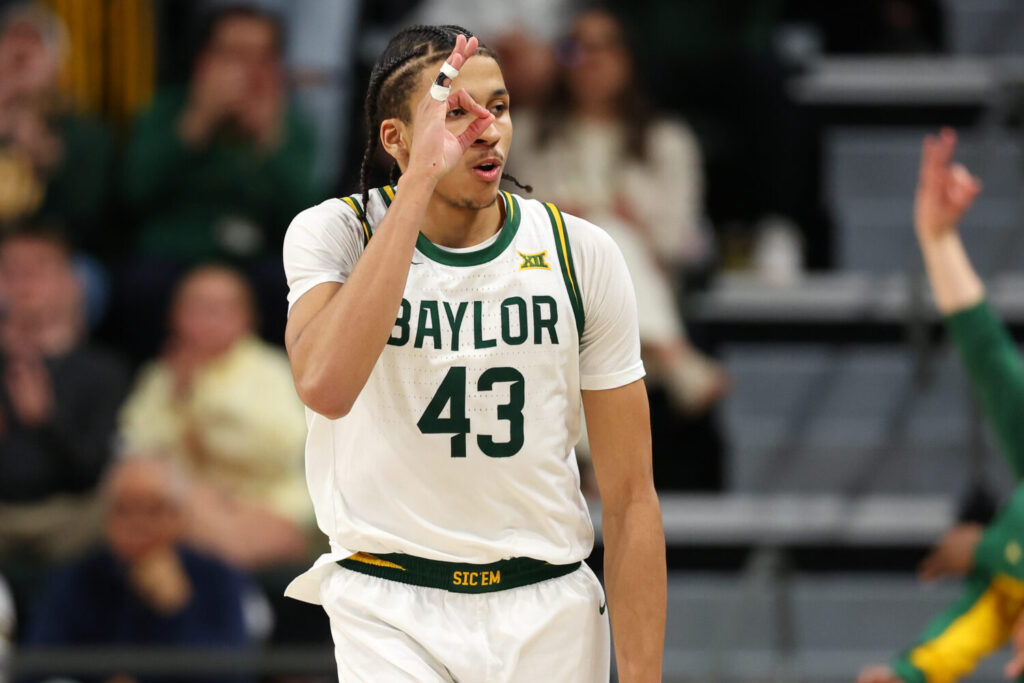
Cameron Carr #43 of the Baylor Bears reacts after scoring during the second half against the Arizona Wildcats at Foster Pavilion on February 24, 2026 in Waco, Texas. (Photo by Sam Hodde/Getty Images)
12. Cameron Carr
Carr was one of the guys I ended up falling for a bit in this process, thanks to his blend of size and shooting and athleticism.
He averaged 18.9 points, 5.8 rebounds, 2.6 assists, and 1.3 blocks with a 62.2 true-shooting percentage at Baylor, showing real scoring production to go with the athletic tools. The shot-making flashes, defensive upside, and positional size make the NBA pathway pretty clear if the jumper and decision-making prove reliable. He’s got the archetype that every team needs as well, and the Kings need his style more than most.
He should not be in play at No. 7, but if they’re able to trade back into the first round as some have speculated, I think adding Carr would do wonders for their offensive spacing, athleticism, and overall size as a group.
13. Aday Mara
Mara would be higher on a non-Kings specific board and would be a weird fit in Sacramento, but simply deserves to be mentioned.
He averaged 12.1 points, 6.8 rebounds, 2.4 assists, and 2.6 blocks (!!) on a 65.9 true-shooting. Per-36, he averaged 4.0 blocks per game. There are not many players with his combination of size, touch, passing, and rim protection and some already established team will really benefit from the addition of him. The idea of him replacing Isaiah Hartenstein in Oklahoma City would make a lot of sense. Or maybe somewhere like Golden State, which is a similar spot as the final player on this list.
Unless the Kings view him as clearly better than the available crop, using No. 7 on a center would be difficult to justify. Mara may make more sense only if they moved down (or back into the lottery) and the board fell in a strange way.
14. Yaxel Lendenbord
Lendeborg is more of a projected good player option who should be ready to produce sooner rather than later coming into the league at 23 years old.
He averaged 15.1 points, 6.8 rebounds, 3.2 assists, 1.2 blocks, and 1.1 steals on 64.6 true shooting, giving him one of the more complete statistical profiles in college basketball. He defends, rebounds, passes, plays with physicality, and some team in the mid to late lottery will probably end up ecstatic to add him.
The questions are more about age and upside.
More Sactown Scouting Report
- The Pace, Poise, and Playmaking of Kingston Flemings
- Sactown Scouting Report: The Star-Swing Case for Darius Acuff Jr.
- Sactown Scouting Report: Second-Round Guards To Consider
- Sactown Scouting Report: The Unorthodox Upside of Keaton Wagler
- Sactown Scouting Report: The Creative Chaos of Mikel Brown Jr.
Upcoming Sacramento Kings & NBA Offseason Schedule
- Tuesday, June 23rd – NBA Draft (Round 1)
- Wednesday, June 24th – NBA Draft (Round 2)
- Tuesday, June 30th – NBA Free Agency negotiation period begins (3 PM PT)
- Thursday, July 9th – NBA Las Vegas Summer League begins
- Monday, July 13th – Free Agency moratorium ends / signings can become official
Thank you for reading SactownSports.com. Follow us on Twitter and Google News, and subscribe to our YouTube channel.
Related
 What to make of Sacramento’s home-opening loss
 Big nights from Sabonis & Acuff aren’t enough as Kings fall to Blazers
 49ers’ Brock Purdy works to build chemistry with changing receiver group
 49ers need WRs to step up if Mike Evans misses Falcons game
 Kings’ Shot Selection Problems On Display in Season Opener
 High School Showcase: Del Oro HC Josh Parry

Comments
1 Comments
This was a great write up Brenden....you put in a lot of hardcore work. Really enjoyed reading it!